10 Inspiring Female Entrepreneurs You Should Know in 2026
There’s no shortage of inspiring female entrepreneurs lists out there. Most of them read like Wikipedia summaries – a name, a company, a net worth – and leave you feeling more overwhelmed than motivated.
This one’s different. Because the most inspiring female entrepreneurs aren’t just the ones with the biggest exits or the most famous faces. They’re the ones whose decisions, doubts, and defining moments actually teach us something useful – something you can take back to your kitchen table at 11pm when you’re wondering if any of this is going to work.
We’ve pulled together ten of the most inspiring female entrepreneurs of 2026. Not just to celebrate what they’ve built – but to look at what they did before the success arrived.
What the most inspiring female entrepreneurs have in common
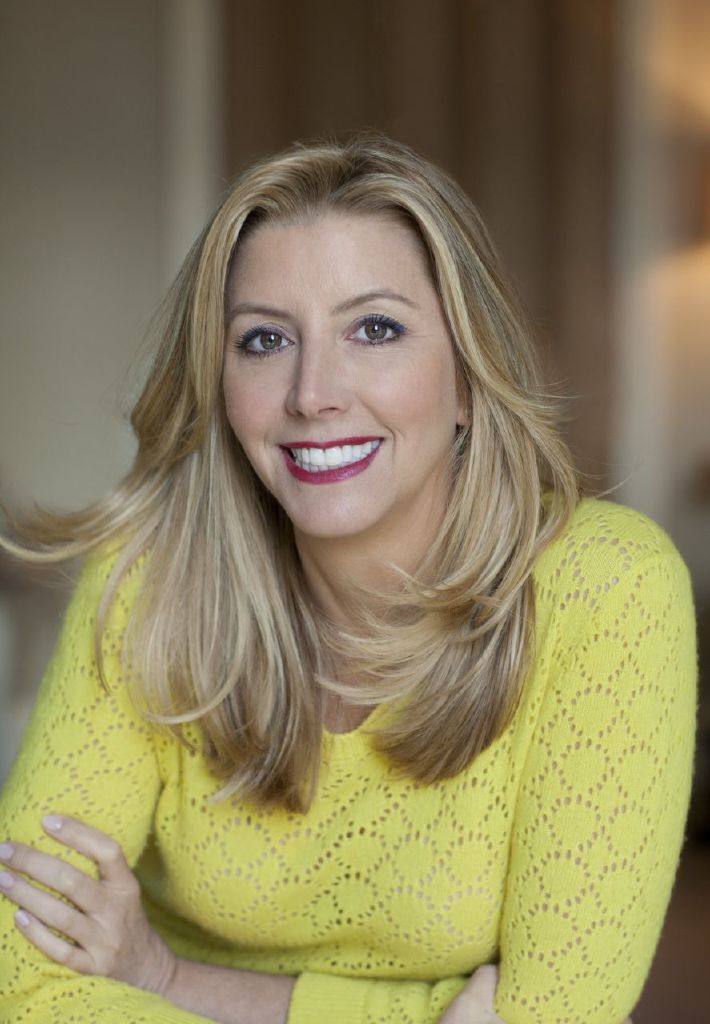
1. Sara Blakely — Spanx
Sara Blakely started Spanx with $5,000, no business background, and an idea she believed in so much she kept it secret from her own family while she was developing it. She wrote her own patent to save money, drove from department store to department store to pitch her product in person, and was rejected constantly.
She’s now worth over $1 billion.
What makes Sara stand out isn’t just the success story – it’s her relationship with failure. She talks openly about how her father used to ask her at the dinner table what she’d failed at that week. Not what she’d achieved. What she’d failed at. He’d high-five her for trying and falling short. That reframe, failure as evidence of effort rather than evidence of inadequacy, is something she credits for everything.
The lesson: What if you stopped treating your failures as proof that it isn’t working, and started treating them as proof that you’re trying?
2. Whitney Wolfe Herd — Bumble
Whitney Wolfe Herd didn’t set out to build a dating app. She set out to fix something that felt broken, the power dynamic in how women experience online connections. After a difficult experience at a previous company, she could have walked away from the industry entirely. Instead, she built Bumble, a platform where women make the first move.
She became the youngest female CEO to take a company public at 31. In 2025, her story was turned into a Hollywood film. And none of that was the original plan.
What Whitney talks about again and again is the importance of building something rooted in a genuine problem, not a trend, not an algorithm, not what investors want to fund. A real problem that real people have.
The lesson: The best businesses aren’t invented. They’re noticed.

3. Melanie Perkins — Canva
Before Canva was a household name, Melanie Perkins was sleeping on her co-founder’s sofa and being turned down by over 100 investors. One hundred. She was pitching a product that now has over 200 million users and is valued in the billions.
She didn’t have the right connections. She wasn’t in Silicon Valley. She was a young Australian woman who believed that design tools should be accessible to everyone, not just people who could afford expensive software and years of training.
What she kept doing, through every rejection, was refining the pitch, not changing the vision. She knew what she was building. She just needed to find the people who could see it too.
The lesson: The right people will get it. Keep going until you find them.

4. Rihanna — Fenty Beauty
When Rihanna launched Fenty Beauty in 2017 with 40 foundation shades, the beauty industry called it a risk. It sold out in 40 days and made $100 million in its first 40 days of trading. The industry had a term for it almost immediately: the Fenty Effect.
What she did wasn’t revolutionary in concept, she just made products for people who’d been ignored. Women with deeper skin tones who had never been able to walk into a high street beauty counter and find their shade. She saw a gap that an entire industry had chosen not to fill, and she filled it.
She didn’t follow the rules of how beauty brands are supposed to launch. She followed her own instincts about what her community actually needed.
The lesson: Sometimes the biggest gap in the market is just the one nobody bothered to look at.

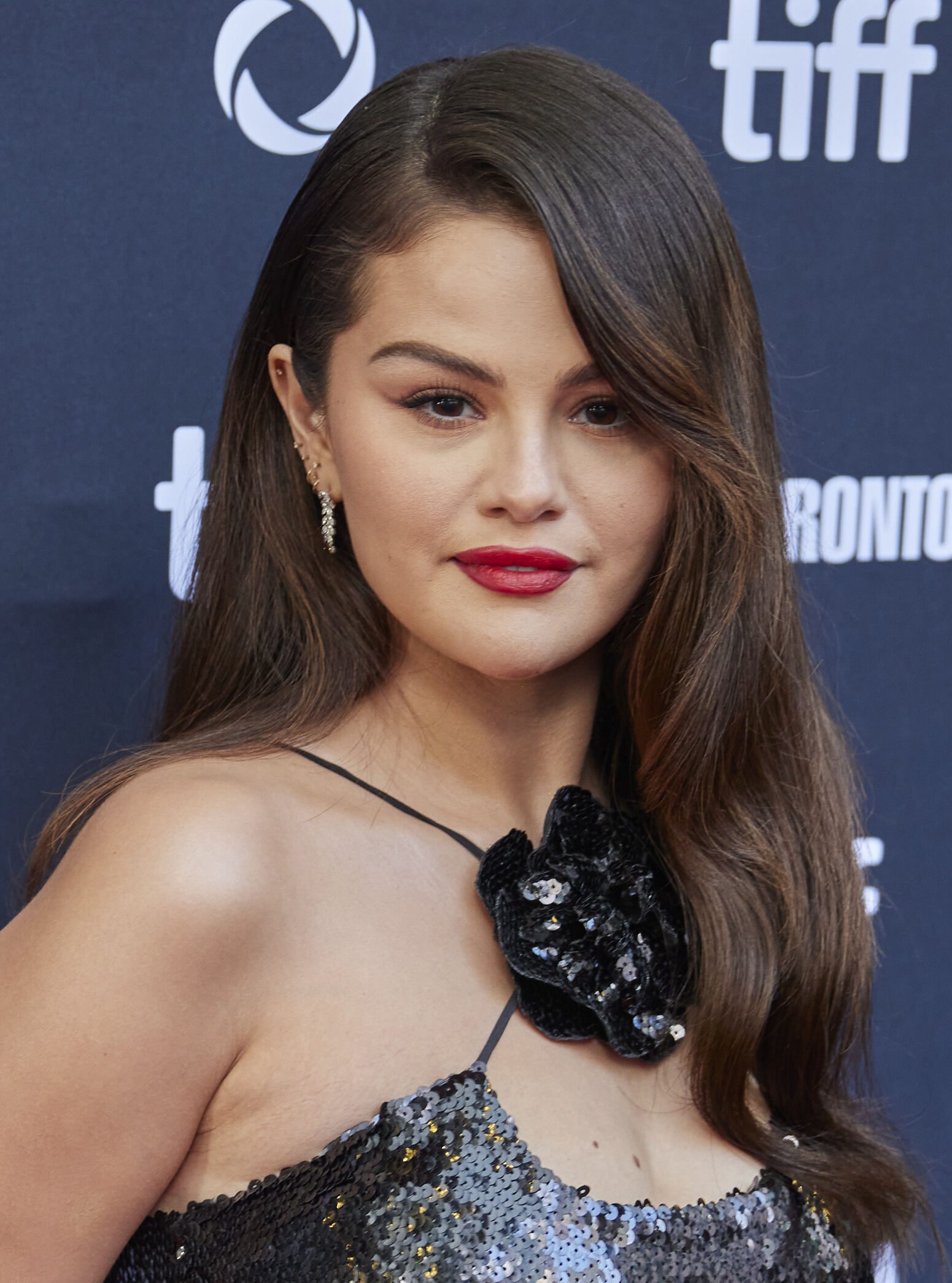
5. Selena Gomez — Rare Beauty
Rare Beauty isn’t just a cosmetics brand, it’s a mission. Selena Gomez built it around the idea that beauty products shouldn’t make people feel like they need to be “fixed.” In a world where wellness content can tip easily into toxicity, she’s built something that actively pushes back against that.
She’s also one of the most open public figures about living with chronic illness and navigating mental health struggles while running a business. She doesn’t hide the hard parts to appear more aspirational. She leads with them.
The Rare Impact Fund, which commits 1% of annual sales to mental health support, was built into the business from day one – not added later as a PR move.
The lesson: You don’t have to separate who you are from what you build. Sometimes they’re the same thing.

6. Melanie Elturk — Haute Hijab
Melanie Elturk built Haute Hijab from a side project into the leading modest fashion brand in the US, while being told, repeatedly, that the market was too niche to scale.
She believed her community deserved better than what was available. She started small, stayed close to her customers, and built everything around genuine need rather than trend cycles. The brand now reaches millions of women globally.
What sets her apart is that she never chased the mainstream. She doubled down on her community and let the mainstream come to her.
The lesson: “Too niche” is often just code for “we haven’t tried.”
7. Iseult Ward — FoodCloud
Iseult Ward co-founded FoodCloud after noticing that supermarkets were throwing away huge quantities of food while charities nearby didn’t have enough. She built a platform that connects the two, food surplus on one side, charities who need it on the other.
Millions of meals have been shared through FoodCloud. She’s on Forbes 30 Under 30 Europe and Time Magazine’s Next Generation Leaders list. And it started with one simple observation about a problem that was hiding in plain sight.
She didn’t wait until she had a perfect business plan. She started with the problem and worked backwards.
The lesson: You don’t need a brilliant idea. You need to pay attention.
8. Amira Rasool — The Folklore
Amira Rasool started The Folklore, a platform helping independent African and Black-owned fashion and retail brands sell globally, with a $30,000 investment. She’s since raised over $6 million in funding and now supports over 700 brands.
She was featured on Forbes 30 Under 30 in 2024 and is among the youngest Black women to raise over $1 million in pre-seed funding. What she built isn’t just a business, it’s infrastructure. A way for brilliant brands to reach global audiences they never could have accessed alone.
She talks about the importance of building for your community first, and trusting that the value speaks for itself.
The lesson: When you build something that genuinely serves people who’ve been underserved, you’re not fighting for market share. You’re creating one.
9. Kiran Mazumdar-Shaw — Biocon
Kiran Mazumdar-Shaw started Biocon in a garage in Bangalore in 1978 with a £250 loan. She was 26, she had a science degree, and banks wouldn’t lend to her because they didn’t think biotechnology would ever be a viable business in India.
She’s now one of the most influential women in biotech globally, a billionaire, and has spent decades making life-saving medicines more affordable and accessible.
What strikes me about her story is how early the odds were stacked against her, the industry, the geography, the gender, the time. And how little that ended up mattering compared to her refusal to accept that it couldn’t be done.
The lesson: The people who tell you it can’t be done are usually the ones who didn’t try.

10. The most inspiring female entrepreneur might be closer than you think
This might sound like a cop-out, but stay with me.
Every woman on this list started somewhere. A garage. A sofa. A kitchen table. A $5,000 savings account. A rejection letter. A problem they couldn’t stop thinking about.
The thing that separates the people who build something from the people who don’t isn’t talent, or connections, or luck, or the right moment. It’s the decision, usually made quietly, without anyone watching, to keep going anyway.
You don’t have to be building a billion-dollar company for that to count. You don’t have to be on a Forbes list. You just have to be doing the thing, consistently, even when it’s slow and quiet and you’re not sure anyone’s paying attention.
That’s what all of these women had in common at the start. Not success. Persistence.
Every inspiring female entrepreneur on this list had one thing the glossy version doesn’t show you — a moment where they weren’t sure it was going to work. Sound familiar?
If you’re building a business and doing it without much of a support system around you, I built Female Entrepreneurs HQ for exactly that reason. A community of women who are figuring it out, supporting each other, and growing at their own pace – no hustle culture, no pressure, no FOMO. Just real connection.
The most inspiring entrepreneur
might be in our community
Female Entrepreneurs HQ is a private membership for women building businesses — a place for real connection, honest conversations, and genuine support. No hustle culture. No pressure. Just your people.
Come and find your people → 30-day money-back guarantee · No pressure, ever